Illuminate Your Garage with High Lumen Hexagonal Honeycomb Light
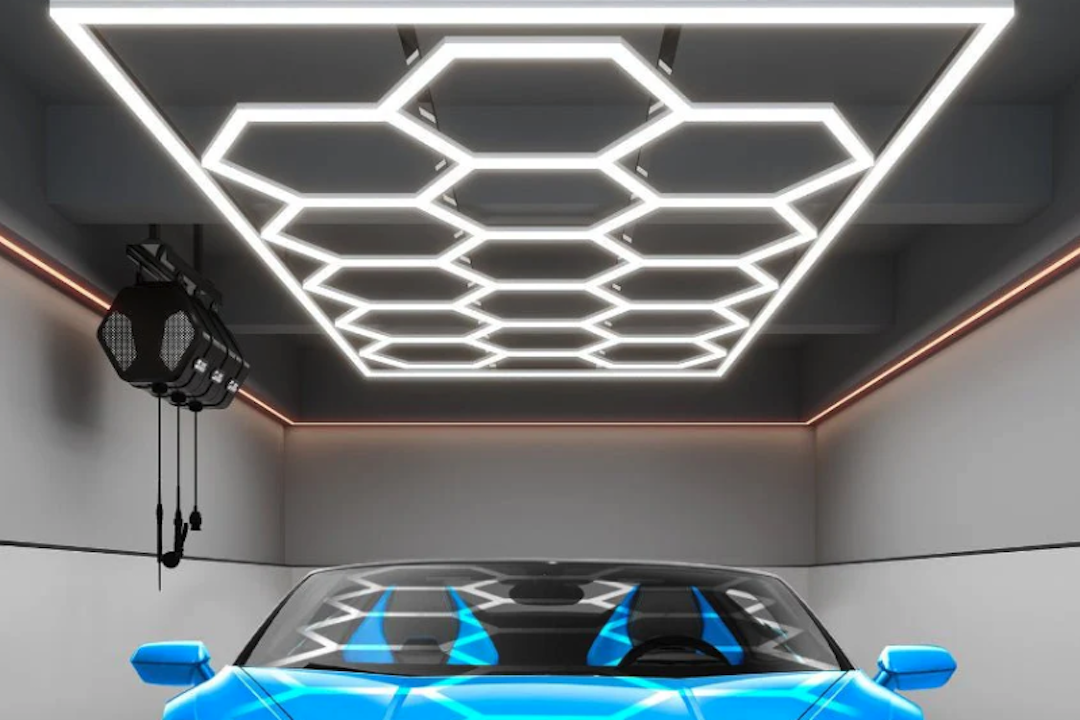
Lighting up your garage efficiently comes down to one thing: getting enough light where you need it. High lumen hexagonal honeycomb lights, often called “hex lights” or “modular lighting systems,” certainly deliver on that front. They provide a bright, even wash of light across your entire workspace, drastically improving visibility compared to traditional single-bulb fixtures or fluorescent tubes. This type of lighting isn’t just about brightness (though they’re definitely bright); it’s about the quality and distribution of that light, making tasks easier and your garage a more functional space.
When you’re looking for garage lighting Nolowa, you’ve got lots of options. But hexagonal honeycomb lights offer a few key advantages that make them a compelling choice, especially if you spend a lot of time working on projects or vehicles. It’s not just a trend; there’s some real practical benefit here.
Uniform Light Spread
Standard shop lights often create hot spots and shadows. You get a super bright area directly under the fixture, then a dimmer ring around it, and sometimes deep shadows in corners or under larger equipment. This unevenness can be a real pain when you’re trying to see small details or work on something that’s partially obscured. Hex lights, by their very design, overcome this. The interconnected hexagonal modules create a grid that ensures light is distributed much more uniformly across the entire ceiling and, consequently, your workspace. This means fewer shadows and a more consistent brightness level everywhere you look.
Reduced Glare
Having a lot of lumens is good, but if that light causes intense glare, it can be counterproductive. Think about looking directly at a bare bulb or a bright fluorescent tube. It’s uncomfortable and can strain your eyes. Hexagonal lights often feature diffusers or a design that spreads the light out over a larger surface area. This reduces the intensity from any single point, leading to less harsh glare and a more comfortable visual environment, even with very high total light output. Your eyes don’t have to work as hard to adjust between bright spots and dim areas.
Aesthetic and Professional Appearance
Let’s be honest, most garage lighting isn’t winning any design awards. Single bar fluorescents or screw-in LED bulbs are purely functional. Hexagonal honeycomb lights, however, add a distinct, modern look to your garage. They create a clean, organized ceiling appearance that can transform a utilitarian space into something that feels more deliberate and professional. If you’re using your garage as a personal workshop, a detailing bay, or just a place you like to spend time, this visual appeal can make a difference in how you perceive and use the space. It moves beyond just a place to park your car.
Lumen Output and Brightness Considerations
When we talk about “high lumen,” what does that actually mean for a garage? It’s more than just a number; it’s about how much light actually reaches your work surfaces and makes a difference.
Understanding Lumens for Garages
A lumen is a unit of total visible light emitted from a source. For a garage, especially one used for detailed work, you’ll generally want a higher lumen count than you might in a storage-focused garage. The Illuminating Engineering Society (IES) often recommends between 50 and 70 lumens per square foot for general garage illumination, with higher levels (up to 100 lumens per square foot or more) for task areas or detailing bays.
So, for a standard two-car garage of say, 400 square feet, you might be looking at a total system output of 20,000 to 28,000 lumens for good general lighting. If you’re doing paint correction, intricate engine work, or other detail-oriented tasks, aiming for the higher end of that range, or even above it, would be beneficial. Hexagonal systems are designed to deliver these high lumen counts efficiently across a wide area.
Color Temperature (CCT)
Lumens tell you how much light, but color temperature tells you what kind of light. Measured in Kelvins (K), it describes the “warmth” or “coolness” of the light.
- Warm White (2700K-3000K): Similar to incandescent bulbs, good for ambiance, not ideal for tasks where color accuracy is important.
- Neutral White (3500K-4000K): A good balance, often used in offices.
- Cool White/Daylight (5000K-6500K): This is generally the preferred range for garages and workshops. It mimics natural daylight, providing excellent clarity and making colors appear truer. This is crucial if you’re painting, matching wires, or inspecting surfaces. Most hexagonal honeycomb lights are available in this cooler CCT range.
Color Rendering Index (CRI)
CRI measures how accurately a light source renders colors compared to natural daylight. A CRI of 100 means perfect color rendering. For garage work, especially if you’re dealing with paint, wiring, or detail work, a high CRI (80 or above is good, 90+ is excellent) is very important. Low CRI lighting can make colors look dull or even slightly off, which isn’t helpful when precision matters. Many high-quality hex light systems will specify their CRI, and it’s a factor worth considering beyond just lumens and color temperature.
Installation and Setup Considerations
Getting your hexagonal honeycomb light system installed isn’t usually complex, but there are a few practical points to keep in mind before you start. Preparing adequately ensures a smoother process and a better end result.
Planning Your Layout
Before you even open the box, think about your garage layout. Where are your workbenches? Where do you park your car? Will you have large equipment that might cast shadows? Most hexagonal systems are modular, meaning you can configure them in different patterns.
- Centered: A large, central hexagon or grid provides excellent overall illumination.
- Zoned: You might opt for smaller independent hexagonal patterns over specific work areas, like a workbench or a detailing bay, alongside general overhead lighting.
- Coverage: Measure your ceiling dimensions. Manufacturers often provide guidance on the coverage area for a given system size. You want enough modules to ensure even light without gaps.
Drawing a simple sketch of your garage ceiling and planning where each hexagonal section will go can save you a lot of time and effort down the line. Consider the dimensions of each module and how they will fit together.
Mounting Options
Hexagonal lights are typically designed for surface mounting directly to your ceiling.
- Direct to Drywall/Plywood: If your ceiling is finished, you’ll need appropriate anchors or to hit ceiling joists for secure mounting. For heavier systems, attaching to joists is always the safer bet.
- Suspended Mounting: Some systems offer suspension kits, allowing you to hang the lights slightly below the ceiling. This can be useful for higher ceilings or if you want to direct light more precisely downwards. However, hanging fixtures can sometimes obstruct tall vehicles or equipment.
- Clearance: Consider the height of your garage door when open, and any tall equipment. You want to ensure there’s enough clearance once the lights are installed.
Electrical Requirements
These systems are typically designed to be hardwired into your existing electrical system, much like a traditional ceiling light or shop light.
- 120V Standard: Most residential garage systems will operate on standard 120-volt circuits.
- Dedicated Circuit: For very large systems with high power draw, it might be beneficial or even necessary to have a dedicated circuit from your electrical panel, especially if your garage already has many outlets or power tools. Consult an electrician if you’re unsure about your circuit capacity.
- Switching: Think about how you want to turn the lights on and off. A standard wall switch is common. If you choose a segmented layout, you might want multiple switches to control different areas independently.
- Professional Help: If you’re not comfortable with electrical wiring, it’s always prudent to hire a qualified electrician. Safety is paramount when dealing with electricity.
Maintenance and Longevity
One of the big advantages of LED lighting, which almost all hexagonal systems use, is their long lifespan and minimal maintenance. This isn’t your old fluorescent fixture that hums and flickers.
LED Lifespan and Efficiency
LEDs are known for their exceptional longevity. While traditional incandescent bulbs might last 1,000-2,000 hours and fluorescents around 10,000-20,000 hours, quality LEDs are typically rated for 50,000 hours or more. This means that if you use your garage lights for, say, 3 hours a day, a 50,000-hour system could last over 45 years. You’ll likely upgrade your garage before you need to replace the lights.
Beyond lifespan, LEDs are highly energy-efficient. They convert a much larger percentage of consumed electricity into light, with very little wasted as heat, which translates to lower electricity bills compared to older lighting technologies for the same light output.
Cleaning
The main “maintenance” for these lights is usually just keeping them clean. Dust and grime can accumulate on the diffusers and reduce light output over time.
- Regular Dusting: A soft cloth or duster can be used periodically to wipe down the surfaces.
- Gentle Cleaning: For more stubborn grime, a damp cloth with a mild, non-abrasive cleaner (like diluted dish soap) can be used. Ensure the lights are turned off and cool before cleaning. Avoid harsh chemicals that could damage the diffuser material.
- Safety First: Always disconnect power to the lights before performing any cleaning that involves liquids or physically accessing the fixtures themselves.
Troubleshooting Common Issues
While LEDs are generally reliable, problems can occasionally occur.
- Section Not Lighting Up: Since these are modular, if one section fails, it often points to a loose connection between modules or a faulty driver for that specific section. Check connections first.
- Flickering: Flickering can sometimes indicate an unstable power supply, a loose wire, or a driver issue. Ensure all connections are secure. If troubleshooting doesn’t resolve it, contacting the manufacturer or an electrician might be necessary.
- Dimming: If the entire system or a substantial portion seems dimmer than usual, it could be a power supply problem or simply accumulated dirt on the diffusers. Refer back to cleaning practices.
- Heat: While LEDs run cooler than traditional bulbs, they do produce some heat. If you notice excessive heat, inspect for proper ventilation around the fixtures, though this is rarely an issue with standard installations.
Manufacturers usually provide detailed troubleshooting guides in their product manuals, which are a good first step if you encounter a problem.
What to Look For When Buying
Navigating the market for hexagonal honeycomb lights means looking beyond just the cool picture. Focusing on some key specifications will help you choose a system that meets your needs and lasts.
Material Quality
The physical construction matters. These aren’t just aesthetic pieces; they need to endure a garage environment, which can sometimes be dusty, humid, or experience temperature fluctuations.
- Aluminum Frames: Look for systems with aluminum frames. Aluminum is lightweight, durable, and excellent at dissipating heat, which helps with the longevity of the LEDs. It won’t rust like steel in potentially damp garage conditions.
- Durable Diffusers: The covers over the LEDs (diffusers) should be made of a robust, impact-resistant material like polycarbonate. This protects the LEDs from accidental bumps and maintains light quality. Cheap plastic diffusers can yellow or become brittle over time.
- Connectors: The modular nature relies on good connectors. These should be sturdy and provide a secure electrical and physical connection between modules. Flimsy connectors can lead to intermittent lighting or difficult installation.
IP Rating
The IP (Ingress Protection) rating indicates how well a fixture is protected against solids (like dust) and liquids (like water). For a garage, especially if you live in a humid area or might occasionally wash a vehicle inside, an appropriate IP rating is important.
- IP20: Basic protection against solid objects (>12.5mm), no protection against water. Acceptable for dry, clean garages.
- IP44: Protected against solid objects (>1mm) and splashing water from any direction. A good balance for most residential garages, offering protection from occasional splashes or high humidity.
- IP65: Fully dust-tight and protected against low-pressure water jets from any direction. Excellent for highly dusty environments or where direct water exposure is possible (e.g., car detailing bays with power washers).
A higher IP rating often means a slightly higher cost, but it provides better long-term reliability in less-than-ideal conditions.
Warranty and Support
As with any significant purchase, the manufacturer’s warranty and customer support are important.
- Warranty Period: Look for at least a 2-3 year warranty on the entire system. Longer warranties (5 years) signal higher confidence in the product’s durability.
- What’s Covered: Understand what the warranty covers (e.g., LED modules, drivers, frame components).
- Customer Support: Check reviews for comments on customer service. Should you have an issue or need replacement parts, good support can make a big difference. A responsive and helpful manufacturer is a valuable asset.
Dimming Capability
While you want high lumens, the ability to dim your lights can be a useful feature. Sometimes you might not need full brightness, or you might want to adjust the ambiance.
- Dimmer Compatibility: If you want dimming, ensure the system explicitly states it is dimmable and what type of dimmer switch it requires (e.g., 0-10V, TRIAC). Not all LED systems are dimmable, and using the wrong dimmer can damage them.
- Smooth Dimming: Good dimming systems will provide smooth adjustment without flickering or buzzing at lower light levels.
By keeping these practical points in mind, you’re better equipped to select a high lumen hexagonal honeycomb light system that will effectively illuminate your garage for years to come, making it a more functional and enjoyable space.